






- Client: NHS Greater Glasgow & Clyde (NHS GGC)
- Sector: Public Healthcare
- Clinical Focus: Multidisciplinary Team (MDT) Cancer Referral & Treatment Pathways
- Delivery Scope: Low-Code Application Development, DevOps Pipeline Integration, Clinical Data Structuring, eHealth In-House Upskilling
- Technology Foundation: Enterprise Low-Code Application Platform (Microsoft Power Platform / Power Apps)
- Clinical Sponsor: Kevin Burton, Consultant Gynaecological Oncologist
Project Impact at a Glance
33%
Reduction in unnecessary MDT case discussion time
DevOps
Agile development methodology
Standardised
Clinical inputs across all cancer pathways
In-House
Upskilled eHealth team to build future low-code apps


The Challenge: Coordinating Complex Clinical Data Across Cancer Care Pathways
Managing cancer pathways and Multidisciplinary Team (MDT) meetings involves coordinating specialists from oncology, surgery, pathology, and radiology. NHS GGC struggled with fragmented information across disparate systems, making it difficult to ensure clinicians had complete, trustworthy records before meetings about patient care plans.
- Clinical Coordination Friction: Assembling imaging, biopsy reports, and patient histories from multiple sources created administrative delays.
- Meeting Time Pressures: Consultant time in MDT sessions was spent confirming basic data points rather than discussing complex treatment paths.
- Cross-Tumour Consistency: NHS GGC needed a standardised referral application capable of handling all cancer types rather than unintegrated point solutions.
The Solution: A Unified Low-Code MDT Cancer Referral Application
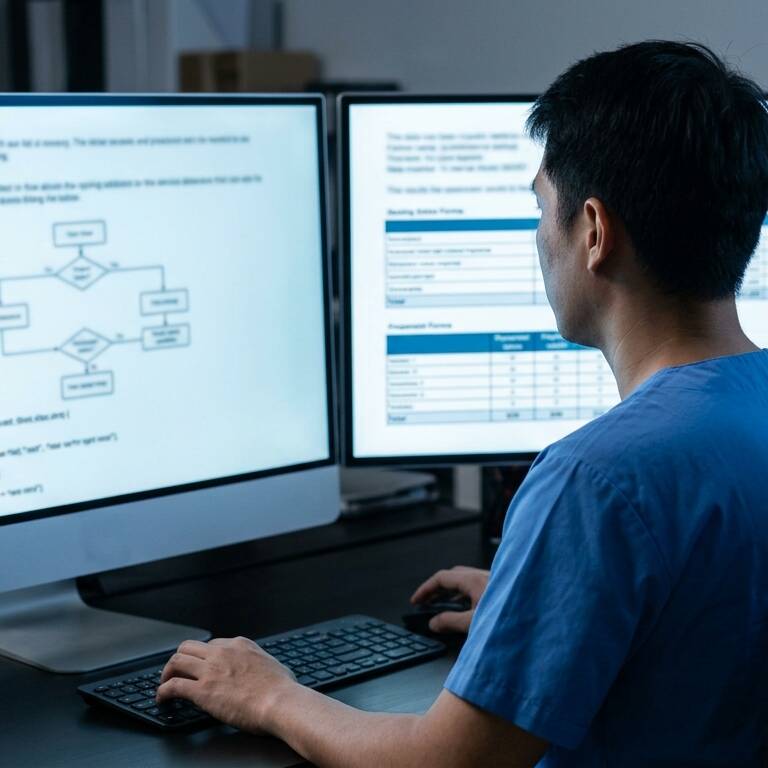
Sword worked alongside NHS GGC’s clinical and eHealth teams using an agile DevOps approach to build a standardised low-code referral app that structures patient data and streamlines radiology and pathology reviews.
Clinical Workflow Design & DevOps Delivery
Worked directly with clinicians to map referral pathways, using agile DevOps cycles to deliver quick improvements.
Data Standardisation & Radiology Task Allocation
Built structured data fields that ensure incoming referrals include relevant clinical histories, automating review tasks for radiology specialists before meetings take place.
eHealth Team Upskilling
Dedicated project time to training NHS GGC’s internal eHealth team on low-code development and maintenance, giving them the capability to build future applications independently.

Measurable Business Outcomes
Efficiency Gain
Eliminated costly specialist external development fees by equipping the eHealth team to maintain and build apps internally.
Operational Resilience
Standardised clinical data fields ensured complete diagnostic records upfront, mitigating miscommunication risks during cancer care reviews.
Speed, Agility & User Experience
Reduced case discussion time in clinical meetings by a third (33%), freeing consultant time for complex treatment pathways.
Future-Proof Scalability & Independence
Scalable low-code architecture provides a consistent referral framework capable of supporting all tumour types across the health board.
"There was a strong collaborative approach from the outset working hand-in-glove with the team at Sword. The right skills and expertise were delivered using a high quality DevOps approach, and we felt that there was genuine common cause in our objectives. Sword also spent considerable time upskilling our eHealth team, making it a much more cost-effective solution, and allowing us to create more solutions ourselves in the future."
Kevin Burton, Consultant Gynaecological Oncologist, NHS Greater Glasgow & Clyde
More Information
The solution runs within the secure NHS Scotland health network, enforcing role-based access controls and audit trails to keep clinical data protected
Low-code development allows solutions to be built around existing NHS clinical workflows quickly and cost-effectively, without the licensing overheads and rigid constraints of proprietary clinical systems
More case studies







Need help?
Whether you are strengthening operational resilience, securing critical infrastructure, or improving organisational preparedness, our UK-based experts are ready to support your mission-critical operations